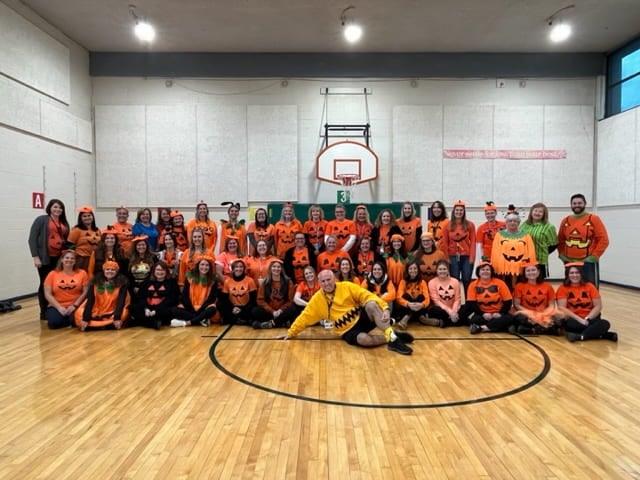

Coming soon to Arno…
Feb. 3
Otis Spunkmeyer Cookie Dough Fundraiser Kickoff
Community Conversation with Mike Darga- 6:30 Arno Media Center (see below)
Feb. 4
No events
Feb. 5
District PBIS 1:00
Feb. 6
No events
Feb. 7
No events
Feb. 10
Ad Council 9:00
ICC 4:00
Feb. 11
Data Dive
Feb. 12
Data Dive
Crisis Team sub committee 9:00
Skating Party 6:00
Feb. 13
K-2 Instruct Rounds
PTA Meeting 6:30
African American Artists Assembly per schedule
Feb. 14
Happy Valentines Day!
Early Dismissal 11:30- Teacher PD


ARNO VISION
ARNO ELEMENTARY WILL PROVIDE A SYSTEM OF SUPPORT TO EMPOWER
AND INSPIRE STUDENTS TO BECOME COLLABORATIVE LEARNERS
THAT STRIVE FOR ACADEMIC EXCELLENCE
Staff SIP Survey Now Open
The data we receive from the Staff SIP survey helps us to better identify items that we may need to look at in our school climate and culture. Please take a few moments to complete this year’s survey so that we may have good data for our plan. The survey will be open from now until
https://eprovesurveys.advanc-ed.org/surveys/#/action/128354/20337

Arno will be once again doing the Otis Spunkmeyer cookie dough fundraiser starting Feb. 3 to help supplement the many requests we get from staff during the school year such as Spelling City, research-based activities, special project supplies, literacy materials, tech, etc. Last year’s fundraiser helped us purchase many extra classroom supply requests, Playworks training for teachers and lunch staff, Zoo Phonics materials for kindergarten, Super Cougar pizza lunch supplies, an ipad for our Broadcast team, and professional development for teachers.
The PTA has been a tremendous resource for our building with all they have given, however, the many teacher requests received throughout the school year to give our students the very best experiences create a need to seek additional support. Therefore, we have partnered with this company to offer you a choice of items should you choose to purchase any, that would support providing more resources for our teachers. The large envelope coming home on Feb. 3 and will contain all of the information needed (and there is an online order method).
Fundraiser Timeline
February 3 – February 18 Fundraiser Sale
February 18 All money and orders due (online payment option available)
Game Truck Prize for qualifying sales: March 11

**Turnover time is about 2-3 weeks, we will contact everyone when the items will be in (before Easter)

STUDENT GOALS
3-5- please remember to review student goals with them to set their path for the next next trimester. Ongoing feedback, in addition to a high effect size, is a critical part of maintaining and reaching their goal. I will be sitting down with all partially proficient students, as well as those who were ID as rushing, and checking in throughout as part of the process.
The dates are below, please send any student with their goals who landed in the partially proficient zone (NWEA predictor), and/or got the “sloth” on their test. Please start the time frame with sending 2 students down- then as one comes back, send the next. The goal is to have another sit down, other than their teacher, to help them focus more on the importance of making their goals and how they can attain them.
3rd grade- Feb. 3 9:-10:00
4th Grade- Feb. 3 10:15-11:15
5th Grade- Feb. 3 1:00-2:00
5 Research-Based Tips for Providing Students with Meaningful Feedback
Feedback is an essential part of learning, but not all of it is productive. We’ve collected five best practices for giving students feedback.

In recent years, research has confirmed what most teachers already knew: Providing students with meaningful feedback can greatly enhance their learning and achievement.
Professor James Pennebaker from the University of Texas at Austin has been researching the benefits of frequent testing and the feedback it leads to. He explains that in the history of the study of learning, the role of feedback has always been central: “When people are trying to learn new skills, they must get some information that tells them whether or not they are doing the right thing. Learning in the classroom is no exception. Both the mastery of content and, more importantly, the mastery of how to think require trial-and-error learning.”
The downside, of course, is that not all feedback is equally effective, and it can even be counterproductive, especially if it’s presented in a solely negative or corrective way.
So what exactly are the most effective ways to use feedback in educational settings?
Although there is no quick or easy answer to this question, here are five research-based tips for providing students with the kind of feedback that will increase motivation, build on existing knowledge, and help them reflect on what they’ve learned.
1. BE AS SPECIFIC AS POSSIBLE
In a review of the available research titled “The Power of Feedback,” University of Auckland professors Helen Timperley and John Hattie highlight the importance of supplying learners with specific information about what they are doing right or wrong.
For example, feedback like “Great job!” doesn’t tell the learner what he did right, and likewise, a statement such as “Not quite there yet” doesn’t give her any insight into what she did wrong and how she can do better the next time around.
Instead, researchers suggest taking the time to provide learners with information on what exactly they did well, and what may still need improvement. They also note that it can be helpful to tell the learner what he is doing differently than before.
Has a student’s performance changed or improved since the last time you assessed her? Let her know about it, even if she still has a long way to go.
2. THE SOONER THE BETTER
Numerous studies indicate that feedback is most effective when it is given immediately, rather than a few days, weeks, or months down the line.
In one study that looked at delayed versus immediate feedback, the researchers found that participants who were given immediate feedback showed a significantly larger increase in performance than those who received delayed feedback.
Another research project, from the University of Minnesota, showed that students who received lots of immediate feedback were better able to comprehend the material they had just read.
Of course, it’s not always possible to provide students with feedback right on the spot, but sooner is definitely better than later.
3. ADDRESS THE LEARNER’S ADVANCEMENT TOWARD A GOAL
Timperley and Hattie note that effective feedback is most often oriented around a specific achievement that students are (or should be) working toward. When giving feedback, it should be clear to students how the information they are receiving will help them progress toward their final goal.
4. PRESENT FEEDBACK CAREFULLY
The way feedback is presented can have an impact on how it is received, which means that sometimes even the most well-meaning feedback can come across the wrong way and reduce a learner’s motivation.
Psychologist and author Edward Deci has identified three situations in which feedback could be counterproductive:
When learners feel too strictly monitored: If learners feel that they are being too closely monitored, they might become nervous or self-conscious, and as a result, disengaged from learning.
When learners interpret feedback as an attempt to control them: Learners may sometimes interpret feedback as an attempt to control them or tell them how they should be doing something rather than guidance on how to improve.
When learners feel an uncomfortable sense of competition: Feedback shared in a group setting could cause learners to feel like they have to compete with their peers. This can be another source of disengagement in learning.
To avoid these situations, Deci suggests fully explaining the purpose of any monitoring, and ensuring that learners understand how the feedback is meant to help them compete against their own personal bests rather than each other.
5. INVOLVE LEARNERS IN THE PROCESS
The importance of involving learners in the process of collecting and analyzing performance-based data cannot be understated. Pennebaker says, “Students must be given access to information about their performance…. At the broadest level, students need to know if they actually have mastered the material or not. Giving them information about the ways they are studying, reading, searching for information, or answering questions can be invaluable.”
When students have access to this information, they develop an awareness of their learning, and are more easily able to recognize mistakes and eventually develop strategies for tackling weak points themselves.
Data Question to Reflect on This Week:
What strategies will we implement for those students who lack the foundation necessary to be successful on the new material we will present?
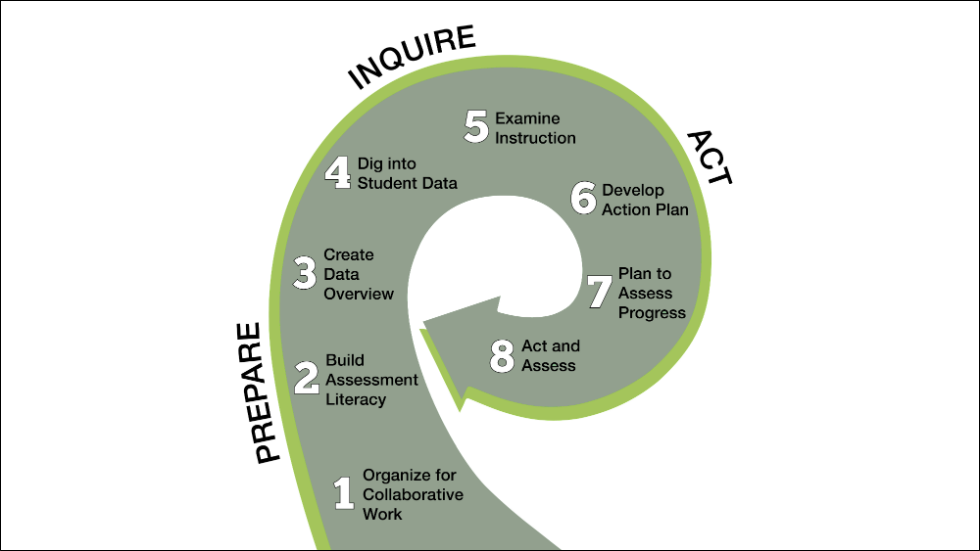

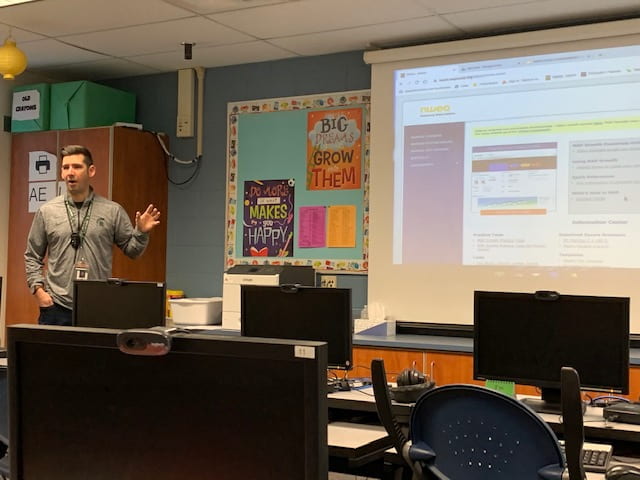
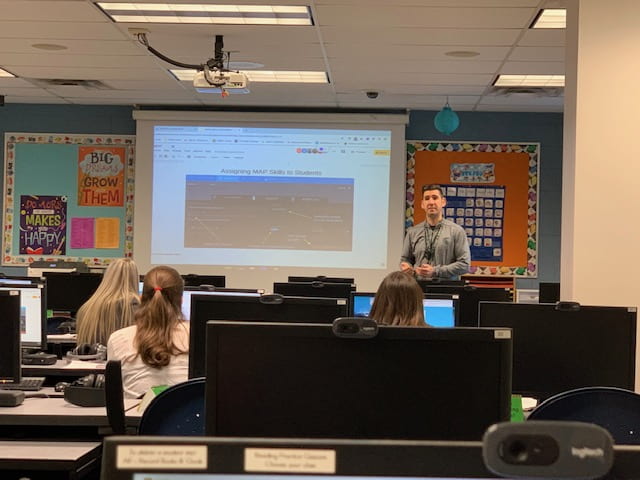
NWEA PD
A BIG Thank you to Brian for guiding our upper grade teachers in the process for MAP skills to help drill down to that actual skills that our kids need to improve on. Please be sure to share any questions as we have a great source at NWEA for all the answers!

Formative Assessment Tech
Interactive Lessons and Video

Edulastic
Powerful formative assessment tool tracks achievement of standards
Bottom line: Efficient platform supports teachers who are expected to assess and track student progress on meeting standards.

Nearpod
Interactive slideshow tool engages students, promotes collaboration
Bottom line: This effective tool leverages the capabilities of 1-to-1 environments and offers both teacher- and student-paced learning.

PlayPosit
Simple design makes it easy to jump into interactive video
Bottom line: With features that are both basic and useful, it’s an easy tool to learn; adding interactivity to video is a snap.

Edpuzzle
Crop, customize, and remix online video content with interactive tool
Bottom line: As a flipped classroom or student creation tool, there are lots of opportunities for use, but teachers will need to be creative if they want students to engage.

Flipgrid
Pose questions, spark thoughtful video responses with stellar tool
Bottom line: A simple way for students and teachers to create online discussion, as long as your classroom culture is mature enough to use it wisely.

LessonUp
Flexible interactive presentation tool engages kids at school and home
Bottom line: LessonUp is for teachers who like designing unique lessons to reach every learner.

Spiral
Provide instant feedback with collaborative, multimedia assessment tool
Bottom line: Engaging, easy-to-use tool that supports both formative and summative assessment while allowing for student collaboration.

ClassFlow
Robust lesson-creation, presentation tool offers built-in assessment
Bottom line: This powerful tool supports connected and blended learning from instruction to assessment, though it’s best used to enhance already great instruction.

Pear Deck
Interactive slideshows offer a variety of ways to engage and assess
Bottom line: While it has some limits, the useful presentation features provide terrific options for formative assessment from any device.

GoClass
Deliver interactive lessons right to kids’ mobile devices and tablets
Bottom line: Support learning in and out of the classroom with this multi-faceted content-delivery tool.
Quizzing, Polling, and Student Response

Classkick
Easy-to-use, real-time monitoring, feedback, and assessment for 1-to-1
Bottom line: It’s a great option for teachers who want to go paperless, provide specific feedback, and encourage collaboration among students in 1-to-1 classrooms.

Mentimeter
Call on everybody at once with flexible, interactive presentation tool
Bottom line: This flexible tool supports the creation of dynamic presentations and can help teachers strike a balance between information and interaction.

Formative
Superb real-time assessment tool a fit for 1-to-1, BYOD classrooms
Bottom line: Cleverly designed for teachers, Formative offers a flexible and attractive solution for gathering a variety of student response types and offering individualized feedback.

Kahoot!
Game-like student-response tool can spark competitive fun
Bottom line: Effortlessly fun quizzing that can lead to productive formative assessment and student reflection if implemented effectively.

Plickers
Useful, low-tech rapid-response tool promotes formative assessment
Bottom line: This can be a useful tool for teachers looking to get quick feedback or snapshots of understanding in technology-limited classrooms.

Sero!
Fresh approach to assessment through concept maps shows promise
Bottom line: This unique formative assessment platform’s success will largely depend on teachers to keep content meaningful and relevant.

Slido
Increase student buy-in with interactive polls and Q&A sessions
Bottom line: Engaging classroom response platform offers teachers and students real-time feedback opportunities.

Socrative
Formative and summative assessment merge in snapshot polls and quizzes
Bottom line: Powerful and easy-to-use student-response system has the potential to support responsive teaching.

Gimkit
Game-show group fun and independent study in one engaging tool
Bottom line: Put students in the driver’s seat with collaborative setup and gameplay features.

Quizalize
Familiar game show-like quizzes with a few new features
Bottom line: Easy-to-set-up and mostly free way to assign quizzes and check for understanding with a handy but paid option for progress tracking.
GoSoapBox
Audience response tool gives instant feedback despite dated design
Bottom line: It’s an easy-to-learn, practical tool for online formative assessment and limited student interaction.

The Answer Pad
Simple, multipurpose assessment tool for the BYOD classroom
Bottom line: A simple but flexible tool for paperless testing and engaging student-response activities in the classroom.

Poll Everywhere
Straightforward student-response tool engages kids with minimal setup
Bottom line: Quick setup and interactive features allow students to engage and teachers to receive and provide immediate feedback.
Discussion

Kaizena
Nifty add-on enables audio and text feedback in Google Docs
Bottom line: If your classroom relies a lot on Google Docs, this might just be the feedback tool you’re looking for.

Microsoft Teams
Collaborative platform helps manage multiple groups and projects
Bottom line: It offers a ton of options for integrating learning; the lack of some typical LMS features may make it a better fit for small groups or nontraditional group configurations.

YO Teach!
Backchannel tool offers interactive polls, drawing, messages, and more
Bottom line: Quick setup and multimodal features make this a great fit for a variety of carefully monitored classroom discussions.

Backchannel Chat
Real-time, moderated online discussions can engage and encourage
Bottom line: Backchannel Chat offers a fun and safe way to hold real-time online discussions that might just increase engagement, interest, and even learning.

Parlay
Comprehensive discussion platform develops critical-thinking skills
Bottom line: A great tool in any subject or topic for teachers looking to make discussion a central part of their classroom.

Piazza
Advanced Q&A tool compels collaboration, higher-order thinking
Bottom line: Encourage collaborative, student-centered learning with this useful platform, but make sure it’s the right fit for your students.
